Divine Mercy Chaplet: how to pray it, step by step
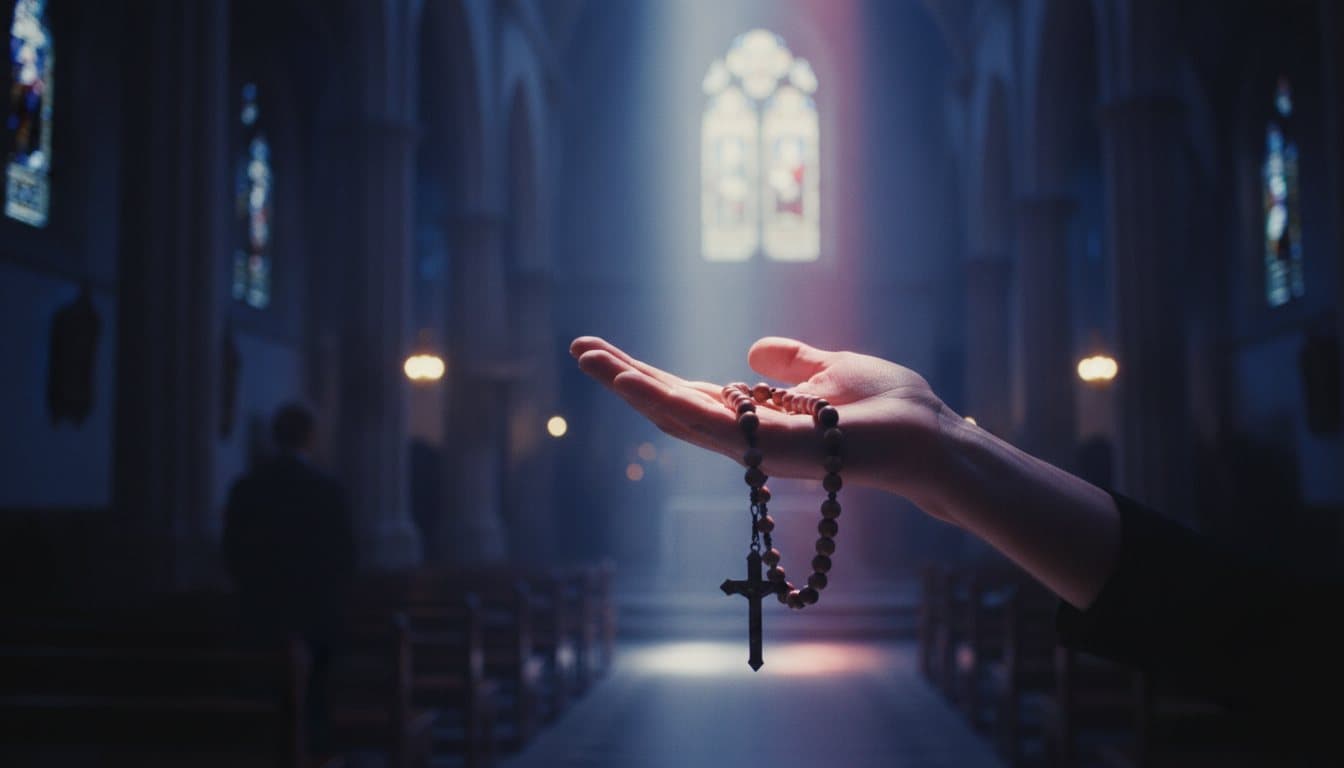
The Divine Mercy Chaplet is a short, trusting prayer given to St Faustina Kowalska, prayed on ordinary rosary beads in about seven minutes. You offer the Eternal Father the Passion of his Son and ask for mercy on the whole world. Here is how to pray it, step by step.
Updated October 2, 20269 min read
In short
- The Divine Mercy Chaplet is a devotion the Church approves, prayed on an ordinary five-decade rosary in about seven minutes.
- It was given to St Faustina Kowalska in 1935 and recorded in her Diary; St John Paul II canonized her in 2000.
- You begin with the Our Father, Hail Mary and Creed, then pray the “Eternal Father” offering on the large beads and “For the sake of his sorrowful Passion, have mercy on us and on the whole world” on the small ones.
- You close by saying “Holy God, Holy Mighty One, Holy Immortal One” three times; many pray it at three o’clock, the Hour of Mercy.
- The chaplet is a plea for mercy, not a substitute for Confession, where that mercy is given.
On this page
What is the Divine Mercy Chaplet?
The Divine Mercy Chaplet is a prayer for God’s mercy on the whole world, prayed on an ordinary rosary. It was given to a Polish sister, St Faustina Kowalska (1905–1938), in a vision in 1935 and written down in her Diary, “Divine Mercy in My Soul”. Through it you offer the Father the Passion of Jesus and ask for mercy — for yourself, for the dying, and for everyone. The Gospel, the Catechism says, is “the revelation in Jesus Christ of God’s mercy to sinners” (CCC 1846), and the chaplet is one simple way to lean on that mercy.
It is a private revelation the Church has approved for devotion, not an article of faith. Approved private revelations do not add to the Gospel; their role is to help the faithful “live more fully by it” in a certain time (CCC 67). St John Paul II, who canonized Faustina in 2000 and called her “a gift of God to our time”, gave the devotion the Church’s trust without binding anyone to believe it. You are warmly invited to pray it; you are never required to.
How to pray the Divine Mercy Chaplet, step by step
Make the Sign of the Cross
Begin: “In the name of the Father, and of the Son, and of the Holy Spirit. Amen.” If you wish, add the optional opening prayer below.
Pray the Our Father, Hail Mary and Creed
On the first beads, pray one Our Father, one Hail Mary and the Apostles’ Creed, just as you would to begin a rosary.
On each large bead, make the offering
On the single bead before each decade, pray: “Eternal Father, I offer you the Body and Blood, Soul and Divinity of your dearly beloved Son, our Lord Jesus Christ, in atonement for our sins and those of the whole world.”
On the ten small beads, ask for mercy
On each of the ten beads of the decade, pray: “For the sake of his sorrowful Passion, have mercy on us and on the whole world.”
Repeat for five decades
Say the offering on the large bead, then the plea ten times — and do this five times over, once for each decade of the rosary.
Close with the threefold prayer
At the end, pray three times: “Holy God, Holy Mighty One, Holy Immortal One, have mercy on us and on the whole world.” Finish with the optional closing prayer if you wish.
The prayers of the chaplet, in full
These are the short prayers of the chaplet itself, so you can pray along as you learn it. The opening and closing are optional; the three prayers in the middle are the heart of the devotion, repeated on the beads.
Optional opening: O Blood and Water, which gushed forth from the Heart of Jesus as a fount of mercy for us, I trust in you.
On each large bead: Eternal Father, I offer you the Body and Blood, Soul and Divinity of your dearly beloved Son, our Lord Jesus Christ, in atonement for our sins and those of the whole world.
On the ten small beads: For the sake of his sorrowful Passion, have mercy on us and on the whole world.
At the end, three times: Holy God, Holy Mighty One, Holy Immortal One, have mercy on us and on the whole world.
Optional closing: Eternal God, in whom mercy is endless and the treasury of compassion inexhaustible, look kindly upon us and increase your mercy in us.
The chaplet as St Faustina recorded it in her Diary, “Divine Mercy in My Soul” (entries 474–476; the optional opening and closing are from entries 84 and 950). These short prayers are in the public domain.
When should you pray the Divine Mercy Chaplet?
You can pray the chaplet at any time, but two moments are traditional. The first is three o’clock in the afternoon (3 p.m.), the Hour of Mercy, the hour of Christ’s death on the Cross; St Faustina wrote that Jesus asked her to honour this hour, even if only briefly. The second is the Divine Mercy Novena, the nine days that begin on Good Friday, when many pray the chaplet each day to prepare for Divine Mercy Sunday.
Many Catholics also pray the chaplet at the bedside of the dying, begging God’s mercy at the hour that matters most. You can pray it for yourself, for someone far from God, or for a soul who has died. It asks the Father to look on the whole world through the suffering of Jesus — a prayer wide enough to hold anyone you carry.
Divine Mercy Sunday and Confession
Divine Mercy Sunday is the Second Sunday of Easter (the Sunday after Easter Sunday). St John Paul II established it for the whole Church in 2000, on the day he canonized St Faustina. On that feast the Church offers a plenary indulgence to those who take part in Divine Mercy devotions, under the usual conditions — sacramental confession, Holy Communion, and prayer for the Pope’s intentions (Apostolic Penitentiary, 2002).
The whole devotion points toward the confessional. “Jesus, I trust in you”, the words on the Divine Mercy image, become real when you bring your sins to the sacrament where mercy is poured out. If it has been a while, our guide on how to go to Confession gives you the words; if you are carrying a particular weight, a prayer for forgiveness can help you begin.
What the chaplet is, and what it is not
The chaplet is a plea for mercy, not a magic formula and not a replacement for the sacraments. It does not forgive sins by itself: sins are forgiven by God, ordinarily through Confession and always through sincere contrition. What the chaplet does is school the heart in trust. It asks, over and over, for mercy “on us and on the whole world”, until you begin to expect the mercy you are asking for.
If praying it ever feeds anxiety instead of trust — a fear that you said it wrongly, or that God will not listen — set the counting aside and simply say, “Jesus, I trust in you.” Scruples are not devotion; our guide to scrupulosity and a kind confessor can help you find peace.
What graces are promised to those who pray it?
In her Diary, St Faustina recorded promises Jesus attached to the chaplet: great mercy for the dying, and grace even for hardened sinners who pray it. Because these come from a private revelation, the Church commends the devotion warmly without making the promises articles of faith (CCC 67). Pray the chaplet trusting in God’s mercy, which is certain, rather than counting on a particular outcome, which is always his to give.
Common questions
How do you pray the Divine Mercy Chaplet on normal rosary beads?
Use an ordinary five-decade rosary. Begin with the Sign of the Cross, then an Our Father, a Hail Mary and the Apostles’ Creed. On each large bead pray the “Eternal Father, I offer you the Body and Blood” prayer; on each of the ten small beads pray “For the sake of his sorrowful Passion, have mercy on us and on the whole world.” Do this for five decades, then say “Holy God, Holy Mighty One, Holy Immortal One” three times.
How long does the Divine Mercy Chaplet take to pray?
About seven minutes if you pray it slowly, a little less once you know it by heart. It is shorter than a full rosary because the prayers on the beads are brief. That is part of why it suits busy days: you can pray it on a commute, during a break, or in the few minutes around three o’clock in the afternoon, the Hour of Mercy.
What time should the Divine Mercy Chaplet be prayed?
You may pray it at any hour, but the traditional time is three o’clock in the afternoon, the Hour of Mercy, when the Church remembers Christ’s death on the Cross. St Faustina wrote that Jesus asked for this hour to be honoured. If three o’clock passes, pray it whenever you can; the time is a help to devotion, not a rule that binds you.
Is the Divine Mercy Chaplet in the Bible?
The chaplet as a set of prayers is not in the Bible. It comes from a private revelation given to St Faustina in the twentieth century and approved by the Church for devotion. Its words, though, are deeply scriptural: they offer the Father the Body and Blood of Christ and plead for mercy through his Passion, echoing the heart of the Gospel.
Can I pray the chaplet for a dying or deceased person?
Yes. Praying the chaplet for the dying is one of its most loved uses; many Catholics pray it at a bedside, asking God’s mercy at the hour of death. You can also pray it for someone who has already died, entrusting them to God’s mercy. The chaplet asks mercy “on us and on the whole world”, so no one you love is outside it.
Do I need special Divine Mercy beads to pray it?
No. The chaplet is designed for an ordinary rosary of five decades, so any rosary works. Special Divine Mercy chaplet beads exist and some people like them, but they are not required. You can even pray it on your fingers if you have no beads at all; what matters is the prayer, not the object in your hand.
What is Divine Mercy Sunday?
Divine Mercy Sunday is the Second Sunday of Easter, the Sunday after Easter. St John Paul II established it for the whole Church in 2000. On that day the Church offers a plenary indulgence to those who take part in Divine Mercy devotions and meet the usual conditions: sacramental confession, Holy Communion, and prayer for the Pope’s intentions. It is a fitting day to return to Confession.
Sources
Cited by paragraph and verse, so you can read them in full. In the end, your priest has the final word.
- Catechism of the Catholic Church, 1846–1848
- Catechism of the Catholic Church, 67
- Catechism of the Catholic Church, 1422
- John 19:31–37
- St Maria Faustina Kowalska, Diary: Divine Mercy in My Soul (entries 474–476)
- John Paul II, Homily at the Canonization of St Faustina, 30 April 2000
- Apostolic Penitentiary, Decree on the indulgence for Divine Mercy Sunday (2002)
Confession Compass is an independent educational tool, not an official body of the Catholic Church. It never absolves sins: only a priest, in the Sacrament of Reconciliation, can absolve.
Keep reading

Prayer for forgiveness: how to ask God to forgive your sins
A prayer for forgiveness asks God for mercy from the heart: traditional Catholic prayers of repentance, how to pray them, and what the Church teaches.
Plenary indulgence: what it is and how to get one
A plenary indulgence remits all temporal punishment due to forgiven sin. See the requirements — confession, Communion, prayer for the Pope — and how to get one.
How to go to confession: a step-by-step guide to the sacrament
How to go to confession, step by step: how to examine your conscience, what to say to the priest, the act of contrition, your penance and absolution.